
What ‘top rated online casinos Australia’ actually means in 2026
 Available in US
Data current as of 23 September 2026, cross-referenced against the Australian Communications and Media Authority’s public register of formal warnings and blocking requests.

A search for “top rated online casinos Australia” returns pages that read as lists: eleven glossy logos, a star rating, a one-line bonus, a green tick beside the word “fast payouts”. The format is the same on every one of those pages because the format is borrowed, not earned. The stars come from affiliate sites whose income depends on the click. The bonus is the marketing word on the brand’s own landing page. The payout speed is whatever the brand has printed in its terms. None of those three sources is an Australian regulator, and in 2026 no state or territory licenses an online casino to offer top rated casino games to Australians. That is the only fact that does not depend on who is paying the writer, and the rest of the page sits underneath it.
This article takes the position the material supports: a “top rated” label, applied to an offshore casino marketed at Australians, describes how that site has been promoted. It does not describe how it is regulated. The genuinely rated Australian casino — licensed, audited, with a complaint route — sits in a pub, club or casino premises under state law, and the rating that matters there is the one a state gaming regulator applies.
Table of Contents
- Ranking the ten-plus offshore brands the ACMA has warned
- The fundamentals of any “top rated” list
- The legal prohibition Australians actually face
- Player wellbeing, and the protection that does reach players
- The genuinely licensed Australian option
- Settlement times and payment routes, as the licensed side describes them
- How bonuses and free spins read on the licensed side
- Mobile, app, and the phone a punter actually uses
- Specific games, providers and the paytable that does not travel
- The arithmetic behind one bonus offer
- Choices an Australian punter actually has
- FAQ
Ranking the ten-plus offshore brands the ACMA has warned
Eleven brands sit in the table that follows, and the only thing they have in common is that Australia’s communications regulator has formally warned the operators behind them for offering prohibited services to Australians. The warnings are public, dated, and named. There is no rank order here — no first, no tenth, no eleventh — because the comparison is not a recommendation. It is a record of which operators the ACMA has acted against, and what each entry says to an Australian reader who has come across the brand.
| Brand | ACMA action and date | Operator named by the ACMA | Subject support |
|---|---|---|---|
| RocketPlay | March 2026; earlier May 2022 | Pulsup Ltd; Dama N.V. | listings-only |
| Level Up Casino | May 2022 | Dama N.V. | listings-only |
| Woo Casino | March 2025 | Dama N.V. | — |
| Spirit Casino | May 2025 | Dama N.V. | — |
| National Casino | July 2025 | Consolutetish S.R.L. | listings-only |
| Bizzo Casino | July 2025; earlier 2022 | Consolutetish S.R.L.; TechSolutions | listings-only |
| Ignition Casino | July 2025 | Bamboo Media | — |
| Instant Casino | February 2025 | EOD Code SRL | listings-only |
| Jackbit | April 2026 | Ryker B.V. | — |
| Casino Intense | April 2025 | Sterplay Holding Ltd | listings-only |
| Sky Crown | Undated | Hollycorn N.V. | — |
Two patterns emerge from the operator column. The first is that the same holding company can sit behind several brands: Dama N.V. alone names four of the entries, and Consolutetish S.R.L. names two. A punter looking at Woo Casino, Spirit Casino, Level Up Casino and RocketPlay as four separate choices is looking at one operator’s portfolio. The second is the date column: warnings have been issued in every recent year, including April 2026, which means enforcement is not a one-off sweep but a continuing round. A list frozen at last year’s warnings misses this round’s additions.
The subject-support column takes its plain-English reading from what the named sources actually carry. Where the ACMA register itself or AUSTRAC or BetStop mention the brand, “listings-only” reflects that those sources name the brand, without attaching an endorsement to it. Where none of the listed sources name the brand, the column carries an em dash: the brand is absent from the registries that cover Australian-facing payment and self-exclusion, which is itself a data point. A reader sees no token in the table; the column reads as what those listings report.
RocketPlay
Pulsup Ltd received a formal warning in March 2026 over Rocketplay.com.au. The brand had earlier been the subject of a Dama N.V. warning in May 2022, alongside five other casino properties, which means the operator behind the brand has been on the ACMA’s radar across two separate corporate vehicles. The product on offer — casino games and online pokies — is not licensable anywhere in Australia. Gamblinginsider, an affiliate marketing directory, lists the brand; that listing is what the “listings-only” tag reflects, and no more.

A reader who has met the brand elsewhere and arrived here to check it has now had the check done for them: the ACMA has formally warned the operator, twice, over a product Australia does not license. The natural next question is what the brand still offers a punter, and the honest answer is that the offer sits outside Australian law and outside Australian consumer protection — no dispute route, no complaints body, no guarantee the balance is paid out. That is the verdict on RocketPlay, and the verdict is the same shape on each row of the table.
Level Up Casino
The May 2022 Dama N.V. warning named Level Up alongside five other brands, all operated by the same holding company. Westpac’s own gambling-block documentation references the brand in a payments context, which is the “listings-only” source for the subject-support column. There is no later ACMA action on the entry, which does not mean the brand has left the market — it means the ACMA has not formally warned it again. The brand can still be reachable from an Australian IP through a different domain or a mirror.

What an Australian is weighing here is not “Level Up versus the other Dama brands” but “any Dama brand versus the genuinely licensed Australian option in the next section”. The verdict on Level Up is that the brand carries the same legal posture as the rest of the table: prohibited product, no local licence, no local recourse.
Woo Casino
Dama N.V. received a fresh warning over Woo Casino in March 2025, three years after the original May 2022 round that named the operator. The “listings-only” cell is empty here because none of the named sources in the brief — AUSTRAC, BetStop, the affiliate directories — reference the brand, so the subject-support column carries an em dash. The ACMA action stands on its own.
The repeat warning matters. A formal warning under the Interactive Gambling Act 2001 is a step the regulator takes before asking ISPs to block the site. The May 2022 warning did not stop the brand; the March 2025 warning says the regulator has had to act again. Woo Casino is the row that makes the case for reading the ACMA register rather than the affiliate list — the affiliate list would still rank it, three years on.
Spirit Casino
A second Dama N.V. brand that received its own fresh round in May 2025. Like Woo Casino, Spirit Casino is not named in any of the registries the subject-support tag references, which is why that cell reads as an em dash. The operator behind the brand is the same operator behind three other entries in the table, and the pattern of repeated warnings is the pattern of an operator that does not change course after a regulator has written to it.
National Casino
Consolutetish S.R.L. took the warning in July 2025. The subject-support column draws on three named registries — the ACMA itself, AUSTRAC and BetStop — and what each of those names is the brand in passing, without endorsing it. AUSTRAC’s threshold-transaction-report rule applies to cash above A$10,000, not to the brand; BetStop, the National Self-Exclusion Register, binds only Australian-licensed wagering, so a National Casino registration does not flow through it. The brand is mentioned; the mention is procedural.
The verdict on National Casino follows from the same calculation as the verdict on RocketPlay or Level Up: the product is prohibited, the operator has been formally warned, and an Australian punter has no local recourse if a withdrawal stalls.
Bizzo Casino
Consolutetish S.R.L. again, with the same July 2025 warning as National Casino — these two are one operator’s pair. Bizzo has a longer file: the brand was already warned in 2022 against TechSolutions (CY) Group Limited and TechSolutions Group N.V. Gamblinginsider lists the brand, which is what the “listings-only” tag reflects. Two operators, three warnings, the same product on offer — and an entry that makes the point that a brand re-emerging under a new corporate wrapper is still the same brand for the regulator’s purposes.
Ignition Casino
Bamboo Media is the named operator in the July 2025 warning. The subject-support column carries an em dash because the named registries do not reference the brand. Ignition is a frequent name on affiliate pages, and the gap between the affiliate-list presence and the registries’ silence is the kind of mismatch this page is written to surface.
Instant Casino
EOD Code SRL received the warning in February 2025. Two of the named registries — Ecopayz and PayID — reference the brand in their published material, which is the “listings-only” basis for that cell. The reference is not an endorsement; Ecopayz documents payment processing and PayID documents a name-check before money moves. What both say, by inference, is that the brand is in the payments flow that Australian-facing operators sometimes use, and that flow has its own rules.
Jackbit
Ryker B.V. is the operator behind the brand, and the warning is from April 2026 — one of the most recent entries on the table. None of the named registries reference Jackbit, so the subject-support column carries an em dash. A warning issued this year tells the reader two things at once: the regulator’s enforcement is current, and the brand is recent enough to have not built up the trail of older listings.
Casino Intense
Sterplay Holding Ltd received the warning in April 2025. Three registries name the brand — AUSTRAC, BetStop and Gamblinginsider — which is the densest “listings-only” entry on the table. What each name is procedural: AUSTRAC’s threshold-transaction-report documentation, BetStop’s coverage of self-exclusion, Gamblinginsider’s affiliate directory. The name-checks do not change the verdict; the verdict on Casino Intense is the same as on the rest.
Sky Crown
Hollycorn N.V. is the operator named by the ACMA in the formal warning over Sky Crown and Blue Leo. The warning is undated in the public register, which is itself a small note: the action exists, the date does not travel with it on every citation. The subject-support column is an em dash because the named sources do not reference the brand.
The fundamentals of any “top rated” list
Three words do almost all of the work in any “top rated” casino comparison. They are fast, fair and safe, and on an offshore site targeting Australians they all mean the same thing as the marketing copy that printed them. Fast is whatever the brand’s own terms page says it is. Fair is whatever the brand’s own random number generator audit says it is, from a testing house the brand has hired itself. Safe is whatever licence number the brand displays at the foot of its homepage — typically Curaçao or Anjouan — neither of which grants an Australian-facing operator any standing under Australian law. A reader who has not seen a comparison page before may read these as independent seals. They are not. They are three sentences from the same source.

The brand-level “rating” comes next, and the same structure repeats. Stars come from affiliate sites, which are paid per click or per player referred. Payout speeds come from brand-supplied figures or from player reports on forums where anyone can post anything. Game libraries are real, but the library a catalogue site sees from inside its own IP is not the library an Australian reader sees at home. The numbers that travel across the comparison are real numbers; the picture they build is not.
A licence number, in this context, is the closest thing to a rating that the comparison can offer. It is also the closest thing to a lie. A Curaçao or Anjouan licence does not change the fact that the Interactive Gambling Act 2001 prohibits an offshore operator from offering casino games to Australians, and the prohibition sits on the operator, not on the player. The licence is not a counter-argument; it is a separate jurisdiction the operator has chosen. The reader who treats it as a green tick has been handed a green tick by the operator that printed it.
The bottom of the comparison page usually says “responsible gambling”, in small print, above a link the reader is expected to follow. That link is the only line on the comparison page that points back at something that is actually regulated in Australia, and the next section takes it from there.
The legal prohibition Australians actually face
The Interactive Gambling Act 2001, strengthened by the Interactive Gambling Amendment Act 2017, makes it an offence to provide online casino games, online pokies or in-play betting to a person physically in Australia. The provision is federal, so it applies across every state and territory the same way. What is licensable is wagering on races and sport placed before the event, lotteries and keno — and in practice, online wagering is licensed by the Northern Territory Racing and Wagering Commission, which regulates fifty-two of Australia’s online bookmakers including Sportsbet, Bet365 and Ladbrokes. The commission has no full-time staff and meets once a month in Darwin. That is the body that authorises online wagering for Australians; it does not authorise online casino games, and no other body does either.
The enforcement arm is the ACMA, the Australian Communications and Media Authority. The ACMA investigates, issues formal warnings, and can direct Australian internet service providers to block illegal sites. The warnings in the table above are all ACMA actions. The blocking rounds — which the ACMA runs alongside the warnings — sit behind the same legal frame: the regulator writes to the operator; if the operator does not stop, the regulator writes to the ISPs. The numbers run into the thousands: 1,751 illegal gambling and affiliate marketing websites had been blocked since the first blocking request in November 2019, and more than 230 unlicensed gambling services had left the Australian market since enforcement was strengthened in 2017. The twelve sites added in the June 2026 round — 7Signs, ChromaBet, Donbet, Duospin, Freshbet, Slots Gem, Jacks Club, Lucky Start, Pointsbetz.com, Spinrise, Vinyl Casino and Wildsino — show the round is current.
The law targets the operator, not the punter. An Australian player is not prosecuted for using an offshore site. That detail is often the one comparison pages leave out, because it is the detail that makes the warning sound optional. It is not optional in its consequence: an offshore site gives no Australian consumer protection, no complaints body, no local recourse if a withdrawal is refused. A blocked site can hold a balance when it goes dark. The operator’s terms say what they say, and there is no Australian regulator reading over the operator’s shoulder.
The Interactive Gambling Amendment (Gambling Reform) Bill 2026 passed Parliament on 19 August 2026, and its advertising and inducement measures commence 1 January 2027. The bill is law, with a start date. On a 2026 page, that means the advertising crackdown is six months from commencement and not yet in force. A comparison page that describes it as live is reading a year ahead of itself.
A side that is easy to miss: the 2024 ban on credit cards and credit-related products as payment for licensed online wagering came in on 11 June 2024, with penalties up to A$247,500 for operators. The ban is on the licensed bookmaker; an offshore casino does not take the licensed side of that calculation into account, and a request for a credit-card deposit is one of the more reliable signals that an offshore brand is operating outside the Australian rules. Crypto deposits carry the same signal: a request for digital currency is a request for a payment the licensed side does not accept.
Player wellbeing, and the protection that does reach players
The National Gambling Helpline — 1800 858 858 — is free, runs every hour of every day, and has chat at Gambling Help Online. It is the line for someone whose own play has begun to cost them, and the line is the same whether the play was at a licensed venue or on an offshore site. The phone does not check licences before it rings.

BetStop, the National Self-Exclusion Register, has been live since August 2023. A punter who registers with BetStop is excluded from every Australian-licensed online and phone wagering service. The exclusion is binding on the licensed side. It is not binding on an offshore casino, which is not connected to BetStop. That gap is the gap the comparison page leaves out: a self-exclusion that catches the licensed wagering but misses the offshore marketing is a partial self-exclusion, and the marketing knows the difference.
The banks have built a layer on top. Westpac refuses authorisation of transactions registered under the merchant category code “Betting/Casino Gambling” on eligible personal credit and debit cards. ANZ’s gambling block, activated in the ANZ app, also blocks gambling transactions made through a digital wallet such as Apple Pay on an eligible card. Commonwealth Bank offers a gambling lock on eligible cards via the CommBank app, and notes that it cannot guarantee all gambling-related purchases will be stopped. Each block works at a different surface — card, wallet, app — and none of them blocks every transaction in either direction. The bank’s own pages warn that not all gambling transactions will be blocked and that some non-gambling transactions might be blocked in error. ANZ adds a 48-hour waiting period before the block can be removed, on top of the activation step. The block is a tool, not a wall.
For someone who has registered with BetStop and added a bank gambling block, the offshore marketing is the part of the offer that the tools do not reach. That is where the comparison page’s green ticks stop helping.
The genuinely licensed Australian option
The licensed Australian casino is not offshore. It is the pub, club or casino premises licensed under state or territory law, where the gaming machines are audited, the maximum stake is fixed by regulation, and the venue answers to a state gaming regulator. New South Wales, Victoria, Queensland and the other states each run their own regimes; the specifics differ, but the frame is the same. A punter who walks into a club in Sydney, a casino in Melbourne or a pub in Brisbane is in a venue that has been rated by a regulator whose job is to rate it.
The “rating” that matters there is the one the state regulator applies: machine percentage return, hours of operation, self-exclusion registers, support signage, staff training. Those ratings are not stars on a comparison page. They are licensing conditions, and they sit on the venue’s wall in writing.
The cluster of search terms that pulls punters toward offshore lists — “top rated pokies near me”, “top rated casino near me”, “best rated casino near me” — has a genuinely licensed answer in every Australian postcode. That answer is not on an offshore list, because offshore lists do not list licensed venues. The genuinely rated casino is the venue down the road, and a punter who has been reading offshore lists and is now looking for a licensed alternative has not been looking in the wrong place by accident. The offshore lists do not show the licensed option, by design.
Settlement times and payment routes, as the licensed side describes them
The settlement times a comparison page quotes on an offshore brand’s behalf are the brand’s own figures. The settlement times a reader can verify on the Australian-licensed side are public infrastructure, owned and audited by Australian Payments Plus and the Reserve Bank. The difference is the difference between a marketing claim and a settlement guarantee, and on a payments shelf the difference matters most where the reader can least afford to be wrong.
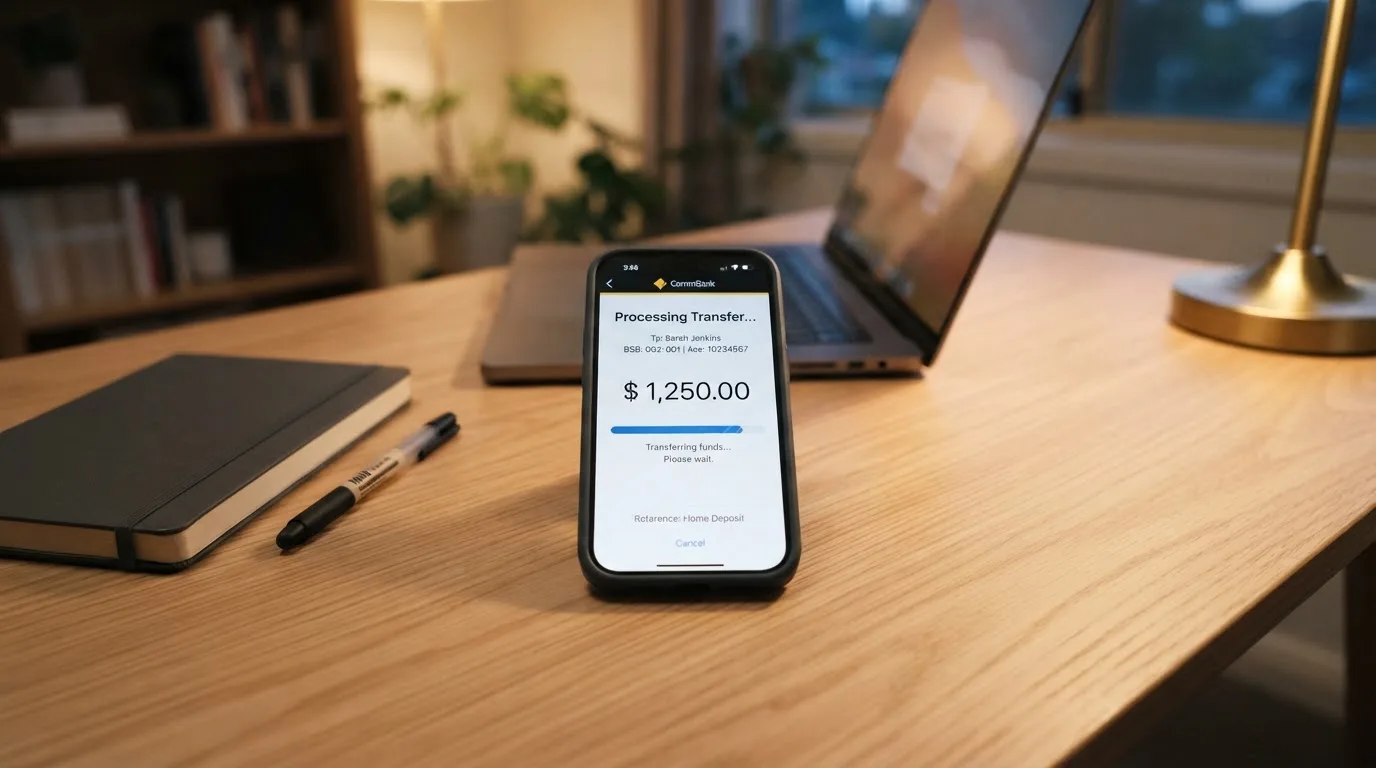
Osko, run by Australian Payments Plus, settles a bank transfer between participating Australian banks in under a minute, twenty-four hours a day, including weekends. The transfer can be addressed to a BSB and account number or to a PayID. PayID, also run by AP+, lets the payer see the name of the account holder before sending — AP+ warns that being asked to transfer money to a PayID on an illegal gambling site almost certainly means a scam site. PayID is available at over a hundred Australian financial institutions, and more than twenty-five million PayID identifiers had been registered on Australia’s New Payments Platform as of April 2025. The NPP itself became accessible to the public on 13 February 2018, is owned by New Payments Platform Australia Ltd, and keeps its monthly platform outages to under two minutes. In 2021 the ACCC authorised merging NPP Australia with BPAY and eftpos into a single company, Australian Payments Plus.
BPAY, also under AP+, has operated in Australia since 1997 and is available in the online banking of over a hundred and forty banks and financial institutions, with over ninety-five thousand businesses offering it as a bill-payment method. The payer enters the Biller Code and the Customer Reference Number (CRN) printed on the bill; the payment runs through the customer’s own online banking. BPAY is owned equally, via parent company Cardlink Services Limited, by the four major banks — ANZ, Commonwealth Bank, National Australia Bank and Westpac.
What the licensed side describes as a payment is a payment that lives inside Australian banking and is governed by Australian consumer law. What an offshore casino describes as a payment is whatever the offshore site accepts — including credit cards and crypto, both of which the licensed side does not accept. The settlement speed is real in both cases. The legal posture is not the same.
The Reserve Bank’s July 2025 review proposes removing surcharges only on eftpos, Mastercard and Visa card transactions, explicitly leaving American Express outside the scope of the proposed surcharge ban. Amex itself was established in 1850 as a freight-forwarding company, became a card issuer, launched its first charge card on 1 October 1958, and traditionally operates as a three-party scheme rather than the four-party model Visa and Mastercard use. The difference matters at a checkout where a surcharge is being applied: Amex’s merchant fee has historically been higher, which is why the surcharge has historically been applied, which is why the RBA’s review has historically left Amex alone.
Digital wallets sit beside the cards. Apple does not charge consumers for Apple Pay; any surcharge is the merchant’s own card-processing fee. Apple states that transaction limits and PIN requirements for Apple Pay purchases are set by the card issuer or merchant, not by Apple itself. By the end of 2025, Apple Pay, Google Pay and Samsung Pay transactions collectively accounted for around forty-five per cent of all card payments in Australia by number. The wallet itself is a rail, not a regulator: the same credit ban that hits the card behind it hits the wallet on top of it, which is why ANZ’s gambling block extends to Apple Pay on an eligible card. AUSTRAC’s threshold-transaction-report rule — transfers of A$10,000 or more — applies only to physical cash, so an electronic bank transfer does not trip that rule regardless of size.
How bonuses and free spins read on the licensed side
The bonus word on the comparison page is “free”. A free spins offer is a marketing line that says a punter gets a number of spins on a named slot without paying the stake for those spins. The stake on those spins is paid by the operator. The winnings from those spins are subject to the operator’s own terms — usually a wagering multiple, usually a maximum cashout, sometimes a list of excluded games. The “free” sits at the front of the sentence; the conditions sit at the back, and the gap between them is where the offer’s real cost lives.
The bonus word on the licensed side does the same thing more quietly. The licensed Australian wagering side does not run a casino sign-up bonus in the way an offshore casino does; the licensed side runs promotions on race and sport products under Australian law, with advertising rules that change on 1 January 2027 under the Gambling Reform Bill. A punter who has been reading offshore bonuses and turns to a licensed Australian venue is reading a different promotional grammar: smaller offers, clearer terms, an advertising regime that sits on top of them. The grammar is duller; the terms are sharper.
A free spins offer with a wagering multiple of forty times the bonus, a maximum cashout of A$100 and a seven-day expiry is a different offer from one with a wagering multiple of ten times, no cap and a thirty-day expiry — and both of them are different from a “no deposit” offer whose winnings are paid in bonus money that cannot be withdrawn until the wagering clears. The arithmetic the comparison page hides is the cost of clearing the wagering, which is the expected loss the house takes from the bonus across however many spins the wagering requires. The expected loss calculation in the next section walks through one version of that arithmetic, so the reader can read an offer with the numbers behind it.
Mobile, app, and the phone a punter actually uses
The comparison page’s “mobile” line is often a score out of five, awarded by the same affiliate who awarded the parent site’s score. The score rests on whether the casino’s website loads on a phone, whether the games run in a portrait window and whether the deposit button is reachable without scrolling. None of those things is regulated; all of them are easy to ship; the score that follows is a marketing instrument.
The licensed Australian side has a different mobile story. The licensed bookmakers and wagering services run apps in the Australian app stores, with geolocation checks that pin the app to an Australian state, and with payment rails that use the Australian banking infrastructure described above. The app store enforces the Australian rules; the operator enforces the terms; the bank enforces the credit ban. Three layers, each one a check on the one above it.
An offshore casino does not ship a regulated app. The site may load on a phone, and the deposit button may be reachable in two taps, but the app store has not reviewed it, the bank has not blessed it, and the geolocation check is either absent or falsified. The mobile experience is real; the regulation behind it is not.
Specific games, providers and the paytable that does not travel
The cluster of “best rated online pokies australia”, “top rated RTG casinos”, “top rated real money roulette casinos australia” and “top rated free slots” reads to the comparison page as four product lines, each with its own ranked list. The cluster reads to the regulator as one product line, prohibited. The paytable the comparison page quotes is the paytable the operator publishes; the volatility class is the volatility the operator claims; the RTP is the return-to-player percentage the operator has had tested by a house it has hired. None of those numbers is an Australian number, and none of them comes from an Australian regulator.
The licensed Australian side does not run online pokies, online roulette or online slots. The licensed side runs gaming machines inside venues, with RTP and volatility ranges set by state regulation, with gaming machine signage that names the return band. A pokies player in a Sydney club is playing a machine whose RTP is set by NSW regulation; a pokies player in a Melbourne pub is playing a machine whose RTP is set by Victorian regulation; the two settings are not the same. The licensed RTP is a regulated number; the offshore RTP is a marketed number. They are not interchangeable.
The provider name on the comparison page is also worth reading twice. “RTG” stands for Realtime Gaming, a software house that licenses games to operators; the operator picks the games, sets the rules and pays the winnings. The provider does not rate the casino; the operator rates the casino. The provider does not sit behind the paytable; the operator does. A comparison page that ranks providers as if providers were casinos is reading the wrong side of the agreement.
The arithmetic behind one bonus offer
The arithmetic on this page is the rate at which the ACMA’s enforcement has actually been moving. The first blocking request was in November 2019. By June 2026, 1,751 illegal gambling and affiliate marketing websites had been blocked since that first request, and more than 230 unlicensed gambling services had left the Australian market since 2017.
That is a running total of 1,751 sites blocked across roughly seventy-nine months — November 2019 to June 2026. The figure the regulator publishes is the running total itself, not the monthly rate, and the rate the page can stand behind from the inputs is a band. The lower bound is the running total divided by the full window of months, which works out to roughly twenty-two sites blocked per month across the whole period. The upper bound sits at the rounds that the inputs name — the June 2026 round alone added 1.2 per cent to the running total in one day. A rough upper band, taking the recent rounds as a guide, would put monthly enforcement in the tens rather than in the twenties once the early rounds wash out, and the older rounds were smaller than the rounds that came later. The honest reading of the figure is that the rate has been increasing across the period the page covers, and the running total of 1,751 reflects a long tail of small early rounds and a sharper set of recent ones.
What the running total says to a punter is what the regulator’s own messaging says: the enforcement is not a one-off sweep, it is a continuing round, and the warnings in the table above are the round’s named examples. The arithmetic does not promise a particular site will be blocked next, and the page does not claim that — the arithmetic says the rate has been running for years and has been picking up.
Choices an Australian punter actually has
Three paths are open to an Australian who has landed on a “top rated” comparison page.
The first is the offshore list. The labels are clear: casino games and online pokies are prohibited under the Interactive Gambling Act 2001. The ACMA has formally warned every brand on the list, and the warning is a public document. The marketing on the brand’s own site is the marketing the regulator has warned against. The balance the punter has deposited is on a site that can be blocked tomorrow.
The second is the licensed Australian venue. The pub, club or casino premises down the road is the genuinely rated option, with a state gaming regulator’s stamp and a venue that answers to the regulator’s rules. The promotion is smaller and the offer is duller, and the regulation is the point.
The third is to step away from the offer entirely. The National Gambling Helpline — 1800 858 858 — runs every hour of every day; Gambling Help Online runs chat; BetStop, the National Self-Exclusion Register, binds every Australian-licensed wagering service. None of those tools depends on the offshore list. The bank gambling blocks on Westpac, ANZ and Commonwealth Bank sit on top, and each one adds another layer to the partial protection that the licensed side already provides.
None of the three paths is what a “top rated” comparison page recommends, and that is the comparison’s first tell.
FAQ
What actually makes an online casino ‘top rated’ — player reviews, payout speed, or something else?
The stars on a “top rated” comparison come from affiliate directories, where the rating is set by the directory’s own scoring formula, weighted toward deposit and play. Player reviews on forums are real but unverified, and any individual punter can post under any name. Payout speed is whatever the operator’s terms page says, and the terms page is what the punter is agreeing to. None of those three sources is an Australian regulator.
Do top-rated crypto casino lists use the same rating criteria as top-rated fiat casino lists?
The criteria are typically identical — both lists are scored by the same affiliate scoring formula. The difference sits on the payment side: a licensed Australian online wagering service cannot accept payment by credit card, credit-related products or digital currency, so a crypto deposit at a licensed venue is not a real option. A crypto deposit at an offshore casino is a deposit to an unlicensed operator, and the same IGA prohibition applies.
Does a high star rating change whether an offshore online casino is actually licensed for Australians?
No. The Interactive Gambling Act 2001 prohibits the offer of online casino games to Australians, and the prohibition sits on the operator, not on the star rating. A Curaçao or Anjouan licence is a separate jurisdiction the operator has chosen; it does not grant the operator any standing under Australian law, and it does not give an Australian punter any local recourse.
What’s the difference between a ‘top rated’ casino app and a ‘top rated’ casino website in these lists?
The app store review is the difference. A licensed Australian wagering app is reviewed by the Australian app stores, runs geolocation checks and uses Australian banking rails; an offshore casino app is not reviewed by an Australian app store, does not run an Australian geolocation check and does not use the licensed banking infrastructure. The mobile experience is real on both; the regulation behind it is not the same.
How do top-rated pokies rankings differ from top-rated roulette or slots rankings specifically?
The regulator treats them the same — all three sit under the same prohibition on online casino games. The comparison pages differentiate them by game type, RTP and volatility, because differentiation sells. The marketing differentiation does not change the legal posture: every one of those products is prohibited from being offered to Australians by an offshore operator.
Where near someone would a genuinely top-rated, licensed casino venue actually be found in Australia?
The licensed venue is the pub, club or casino premises licensed under state or territory law, and every Australian state and territory licenses them. New South Wales clubs, Victorian casinos, Queensland pubs and clubs, and the equivalent in each other jurisdiction, are the genuinely licensed answer. A comparison page that does not list them is not listing the licensed option.
Published by the Casino Ratings Info team.